Walk into any busy workplace at 12pm, whether it is a Tuas factory or an office tower in Raffles Place, and the canteen tells you a lot about the company. Good corporate cafeteria management turns that midday rush into something people look forward to: short queues, hot food, fair prices, and a clean tray every day. This guide explains what running a staff cafeteria actually involves in Singapore, whether to manage it in-house or bring in a partner, what it costs, and how to choose the right operator.
What Corporate Cafeteria Management Actually Covers
In one line: corporate cafeteria management is the complete, day-to-day running of a workplace dining facility (the food, the people, the compliance, and the money) so employees get reliable meals without the business having to think about it. Effective canteen management ties together five moving parts that all have to work at once:
- Menu planning and rotation: designing menus that stay interesting week after week while balancing nutrition, taste, and cost across a diverse workforce.
- Procurement and suppliers: sourcing ingredients at prices that keep meals affordable, and keeping supply steady so a late delivery never stops service.
- Staffing and rostering: hiring and supervising cooks, servers, and cleaners so lunch is ready on time, even when someone is on leave.
- Food safety and compliance: meeting Singapore Food Agency (SFA) rules and keeping the kitchen inspection-ready every day.
- Cost control and reporting: tracking consumption, waste, and spend so the operation stays financially sustainable.
What Does a Cafeteria Manager Do?
The person holding all of this together is the cafeteria manager. Think of the role as part chef’s coordinator, part logistics planner, and part safety officer. A strong cafeteria manager reads the daily headcount, adjusts orders before waste piles up, keeps hygiene records tidy for the next audit, and listens to feedback so the menu evolves. In a large site they lead a full team; in a smaller staff cafeteria in Singapore, they may run several of these functions hands-on. Good corporate cafeteria management ultimately rises or falls on how well this one role is filled.
The Singapore Compliance Layer: SFA and Halal
Compliance is the part generic, overseas advice tends to skip, and it is exactly where experienced corporate cafeteria management in Singapore earns its keep.
Any premises preparing and serving food in Singapore needs the correct SFA licence, and everyone touching food must be a registered food handler who has completed the required hygiene training. Kitchens are inspected, and slip-ups can mean demerit points or suspension. On top of that, if your team includes Muslim employees, halal certification (issued locally by MUIS) is a serious commitment, not a sticker. It governs sourcing, storage, preparation, and the physical separation of halal and non-halal handling from end to end.
Self-Service or Manned Service? Choosing the Right Format
Service format shapes cost, speed, and experience more than most people expect. Here is how the two common models compare.
| Factor | Self-Service Cafeteria | Manned / Served Counter |
| Speed at peak | Fast, moves large crowds quickly | Slower, staff serve each person |
| Staff needed | Fewer | More |
| Portion control | Lower (employees self-serve) | Higher (reduces waste) |
| Best for | Large headcount, tight lunch window | Smaller sites, premium feel, made-to-order |
| Feel | Casual, efficient | Attentive, hospitality-led |
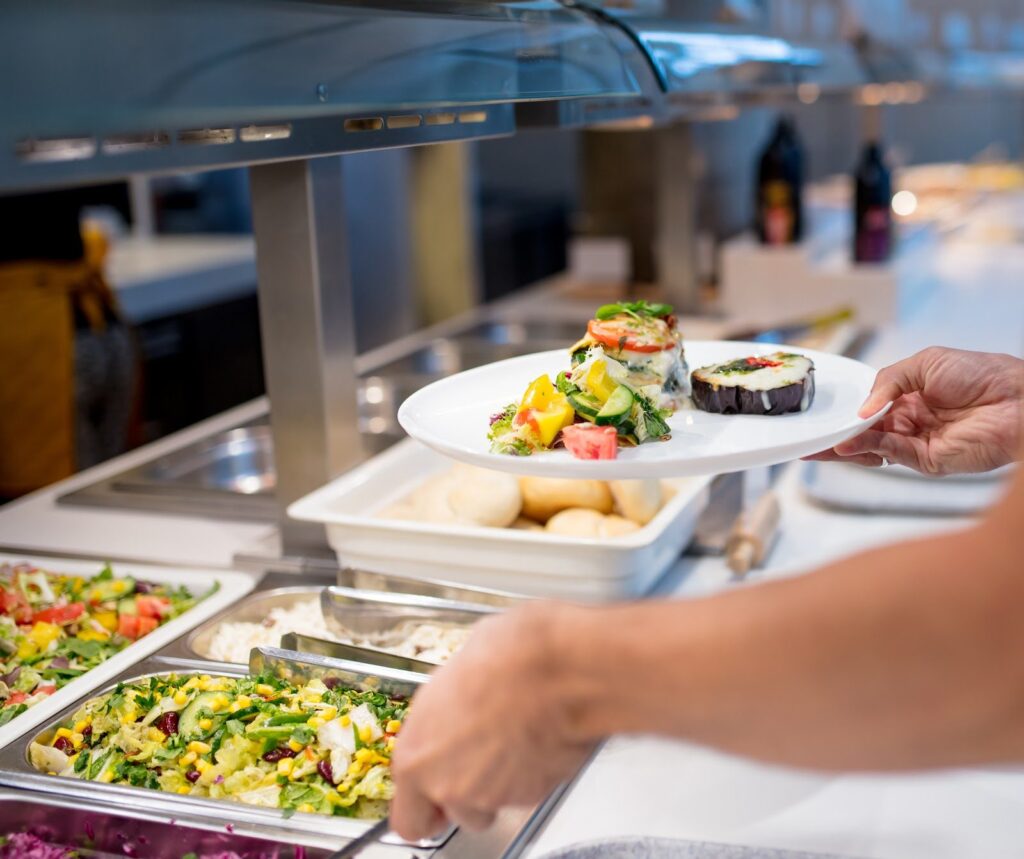
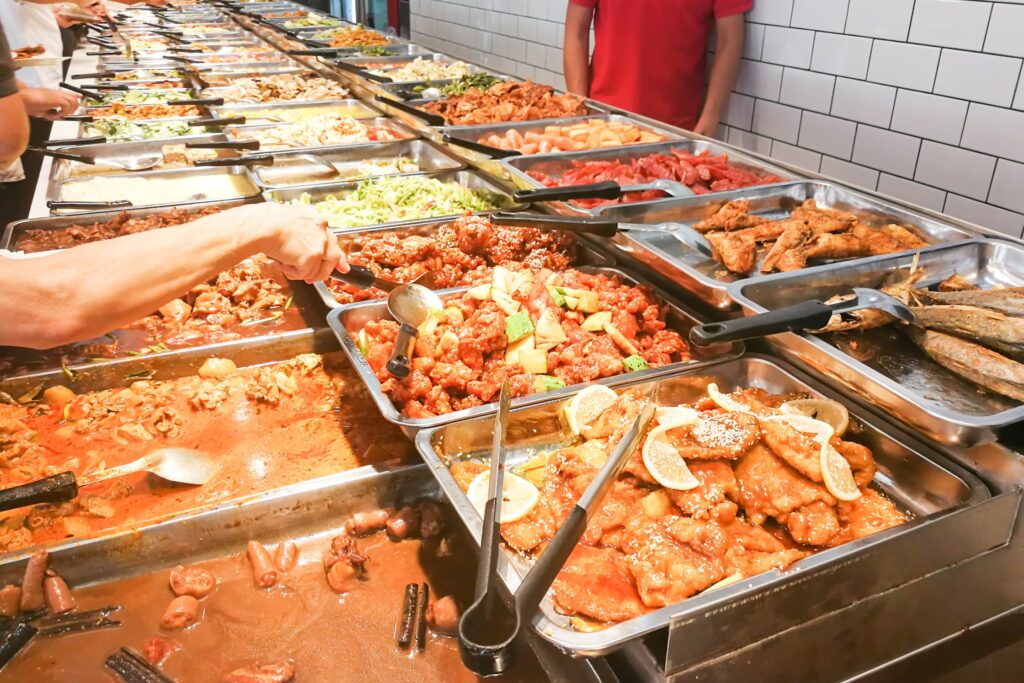
A self service cafeteria in Singapore shines when a big crowd arrives in a narrow window and throughput matters most, common in factories and large offices. Many sites run a hybrid: self-service for high-volume staples, plus a manned station for a rotating daily special. If you are unsure, a well-run self service cafeteria is usually the safer starting point for higher headcounts.
In-House or Outsourced? The Real Decision
Most facilities and HR teams weighing corporate cafeteria management are really asking one question: do we run this ourselves, or hand it to specialists? Both are valid, and the honest trade-offs are below.
| Consideration | In-House | Cafeteria Service Providers |
| Control | Full, direct | Shared via agreed standards |
| Compliance burden | Yours to carry | Handled by the provider |
| Staffing & cover | You recruit and backfill | Provider guarantees cover |
| Buying power | Limited | Scale-based savings |
| Management time | High internal effort | Low, freed for core work |
When Running It In-House Makes Sense
Keeping it in-house gives total control and looks cheaper on paper. In reality, your organisation absorbs recruitment, rostering, procurement, compliance, and the daily firefighting when a cook is sick or a supplier misses a drop. For a company whose core business is not food, the “savings” often vanish once internal supervision time is counted.
When to Bring In Cafeteria Service Providers
Professional cafeteria service providers shift that entire load to a specialist whose whole business is running kitchens well: buying power, proven food-safety systems, and a team that knows how to sail through an inspection. As a rule of thumb, the larger your headcount and the more complex your compliance needs (halal, multiple dietary requirements), the more outsourcing pays off. This is the model Canteen Crew is built around as a dedicated workplace canteen management partner.
What It Costs and How to Choose a Partner
There is no single price for corporate cafeteria management, because cost is assembled from a few drivers: meal volume, staff roster, menu complexity, service format, and compliance requirements such as halal. A high-volume factory canteen with a simple set menu has a very different cost shape from a boutique office with a rotating multi-cuisine spread.
When comparing operators, ask:
- Licensing: Do they hold the right SFA licences and MUIS halal certification, with a clean inspection record?
- Relevant scale: Have they run cafeterias at your headcount and setting (office, factory, institutional)?
- Menu approach: How do they keep menus fresh for a multi-ethnic Singapore workforce?
- Staffing stability: How is absence covered so service never drops?
- Transparency: What reporting do you get on cost, consumption, and feedback?
Frequently Asked Questions
How is canteen management different from catering?
Canteen management runs an ongoing, on-site dining operation daily; catering usually delivers meals for specific days or events. Many Singapore workplaces combine both, so see our related guide on corporate lunch catering services.
How do you reduce food waste in a staff canteen?
Accurate daily forecasting, tracking consumption patterns, right-sizing portions, and adjusting orders based on real attendance are the levers strong corporate cafeteria management pulls first.
Do we need a canteen management or cashless payment system?
For larger sites, yes. Cashless tap or QR payment speeds up queues and gives clean data on consumption, which sharpens forecasting and cost control.
How long does it take to set up a new cafeteria?
It depends on kitchen readiness, licensing, and menu design; a provider will scope timelines during a site visit.
Get Cafeteria Management Right
A staff cafeteria people genuinely enjoy is never an accident. It is disciplined corporate cafeteria management across menu, cost, staffing, and Singapore compliance, delivered the same way every day. Whether you keep it in-house or partner with experienced cafeteria service providers, the goal is the same: clean, hygienic, reliable meals your team can count on.