TL;DR: Onsite catering cooks meals in a kitchen inside your workplace, so food is fresher at service and easier to top up during the rush, but it needs space, equipment and a full crew. A central kitchen model cooks off-site and delivers within strict holding limits, which suits sites without a kitchen and keeps running costs more predictable.
When you set up or renew a staff canteen, the first real decision is where the food gets cooked. With onsite catering, meals are prepared in a kitchen inside your building, a few metres from the serving line. With a central kitchen, they are cooked elsewhere and delivered before lunch. Both can feed a Tuas factory or a CBD office well, but they behave very differently at 12.15pm. Here is how they compare on freshness, hygiene, space, manpower, throughput and cost.
What Is the Difference Between Onsite Catering and a Central Kitchen Model?
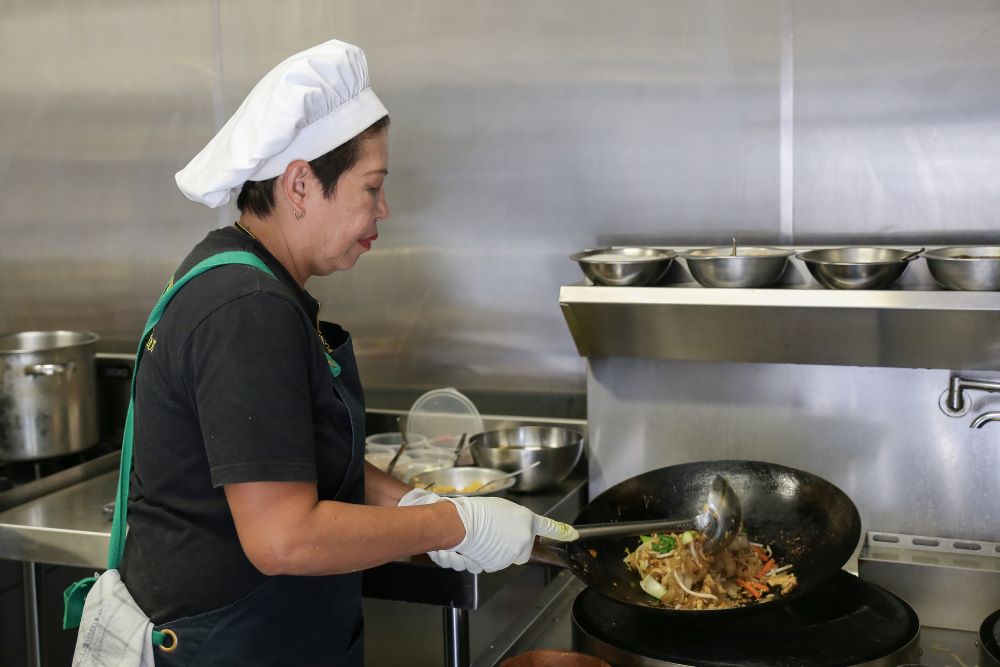
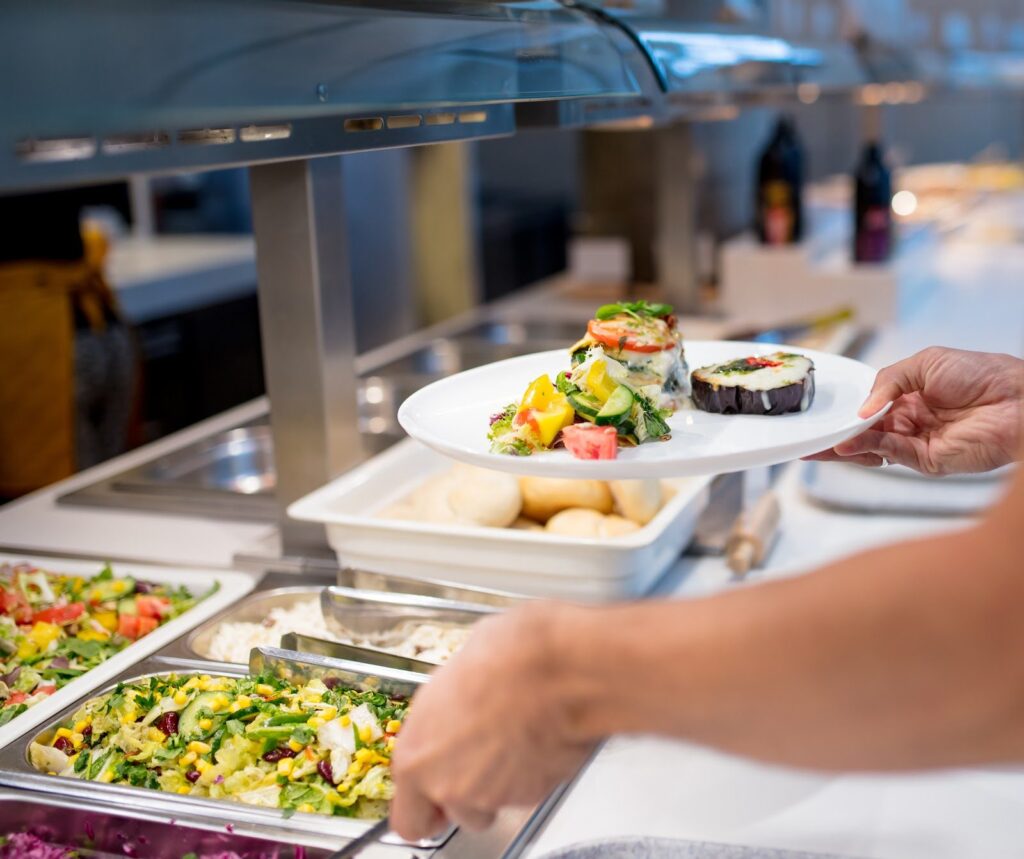
Onsite catering means cooking happens on your premises, while the central kitchen model means food is cooked in a separate licensed kitchen and delivered to your canteen for holding and service. Some operators also run a hybrid, where the central kitchen handles cutting, marinating and sauces, and a small onsite team finishes rice, fried items and vegetables close to service.
| Factor | Onsite Catering | Central Kitchen Model |
|---|---|---|
| Freshness at service | Highest, cooked in batches during service | Good if delivery is timed tightly |
| Holding time | Short | Longer, counted from cooking at the kitchen |
| Space needed | Full kitchen, exhaust, cold storage | Serving pantry with hot-holding and chillers |
| Manpower on site | Cooks, assistants and service crew | Smaller service crew |
| Peak top-ups | Cook more within minutes | Limited to what was delivered |
| Best fit | Large sites, long or 24/7 hours | Smaller sites, no kitchen space |
Which Model Keeps Food Fresher at Lunch?
Onsite catering wins on freshness because the kitchen can cook in small batches that follow the queue. With a central kitchen, the clock starts when food leaves the wok, not when it reaches your canteen. Rice and braised dishes travel well in insulated containers, but fried items lose their crunch and greens dull the longer they sit. Good operators stagger dispatch and choose dishes that hold well, but for teams that eat in several waves, cooking on site is noticeably better.
How Do Hygiene and SFA Food Safety Rules Apply to Each Model?
Both models must control time and temperature, but the risk points sit in different places. The Singapore Food Agency’s guidance on catered meals is direct: “Always keep hot food hot above 60°C and cold food cold below 5°C.” Singapore Food Agency
The same SFA guidelines set a 4-hour limit: catered food kept between 5°C and 60°C should carry a “consume by” time no later than 4 hours after cooking, and anything uneaten by then should be discarded. For a central kitchen, the checks are hot-holding in transport, accurate time stamps and fast transfer into bain-maries. For onsite catering services, the risk moves into your building: raw meat handling, cross-contamination, pest control, grease traps and daily cleaning. Since 19 January 2026, SFA’s SAFE framework grades licensed food establishments on their food safety track record, so ask any canteen catering service which grade its kitchen holds.
How Much Space and Manpower Does Each Model Need?
Onsite catering needs a proper kitchen with exhaust, gas or high-load power, a grease trap, cold storage and a dishwashing area, plus cooks, kitchen assistants and service crew daily. Many Jurong and Tuas factories have that space; most CBD offices do not. A central kitchen setup only needs a serving pantry with hot-holding units, chillers and a handwash point. At Canteen Crew, workplaces without a full kitchen can start with freshly cooked meals delivered daily from our central kitchen, and companies ready to build or upgrade can have a staff kitchen designed, fitted out and managed. See what goes on behind the scenes of corporate catering.
Which Model Handles Peak Lunch Throughput Better?
Onsite catering handles surges better, because cooks can fire another batch in minutes when trays empty. With a central kitchen, what arrives in the morning is largely what you have, so accurate numbers matter far more. Attendance data, shift rosters and past consumption should drive quantities, which is why meal forecasting is critical for any delivered setup. For night shifts or 24/7 sites, a kitchen on site also avoids serving food at 9pm that was cooked at 10am.
How Do Costs Compare Between Onsite Catering Services and a Central Kitchen?
A central kitchen is usually cheaper to start, while onsite catering services cost more to set up but can be efficient at high volume. Onsite cost drivers include kitchen fit-out, equipment maintenance, utilities and a larger daily crew. Central kitchen costs come from transport, packaging and holding equipment, offset by economies of scale, and any central kitchen Singapore caterers run must also absorb over-ordering waste, which quietly raises cost per meal.
The central kitchen Singapore schools are adopting shows where the model fits. According to Mothership, 13 schools moved to a central kitchen model from 2026 because they struggled to find stallholders. See also our institutional catering guide.
Central Kitchen or Onsite Catering: Which Should You Choose by Headcount?
As a general guide, smaller sites lean towards central kitchen delivery, while larger or round-the-clock sites lean towards cooking on site. Use this checklist before you speak to cafeteria service providers:
| Headcount and pattern | Usually the better fit |
|---|---|
| Under 300 staff, office hours, no kitchen | Central kitchen delivery |
| 300 to 600 staff, existing kitchen | Onsite catering or hybrid |
| Over 500 staff, shifts or 24/7 | Onsite catering |
- Space: can you house a kitchen with exhaust and a grease trap?
- Lunch window: does everyone eat in one 30-minute wave, or across shifts?
- Menu expectations: do staff expect freshly fried dishes daily?
- Compliance: who holds the SFA licence, and what SAFE grade does the kitchen carry?
- Contract length: does an onsite kitchen investment match the contract term?
Frequently Asked Questions
Is onsite catering always fresher than a central kitchen?
Usually, because food is cooked close to service. A well-run central kitchen with tight delivery timing can still serve fresh, safe meals.
How long can delivered canteen food be held?
Under SFA guidance, catered food kept between 5°C and 60°C should be eaten within 4 hours of cooking, then discarded.
Can we start with a central kitchen and move to onsite later?
Yes. Many workplaces switch once headcount or hours justify a kitchen fit-out.
Which model suits a factory with night shifts?
Onsite catering, because the kitchen can cook for each shift instead of holding food for hours.
What should we ask cafeteria service providers about hygiene?
Ask for their SFA licence, SAFE grade, audit schedule, temperature logs and how they label consume-by times.
Pick the Kitchen Model That Fits Your Canteen
There is no single winner between a central kitchen and onsite catering. The right choice depends on your space, headcount and lunch pattern. A professional staff canteen operator can run either. As a workplace canteen catering service, Canteen Crew provides staff canteen management from our central kitchen or your onsite kitchen, so your team gets clean, reliable meals every day.